
Technical Guide to Industrial Mould and Die Cleaners: ALK-DC-2.0 Degreaser & Precision Resin Strippers
A technical evaluation of high-solvency industrial mould and die cleaners, focusing on ALKEMIST ALK-DC-2.0 Mold Degreaser and solvent-based resin strippers for precision tooling maintenance.
Overview of Mould and Die Cleaning Formulations
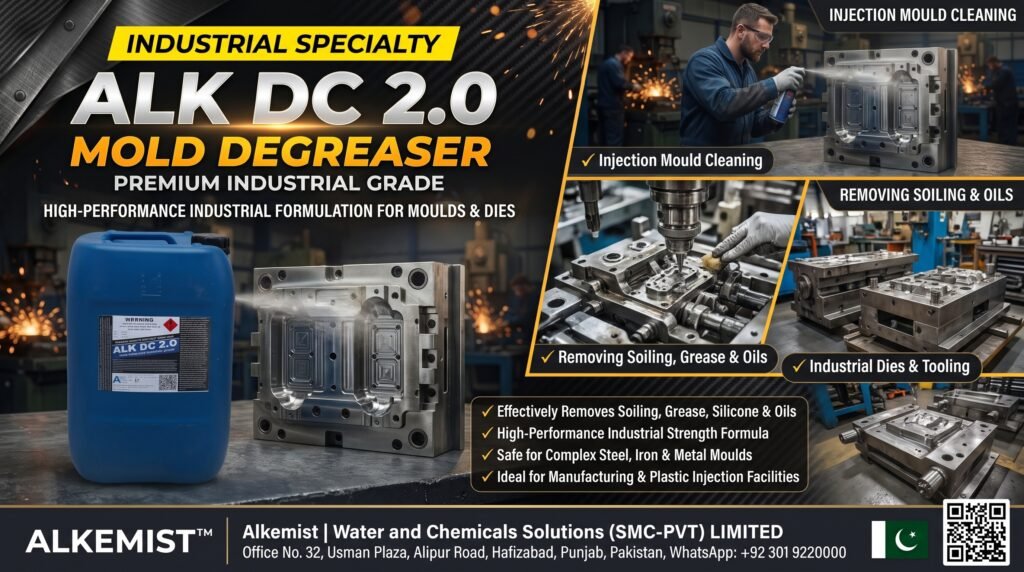
Precision tooling in plastics, rubber molding, and metal die casting relies heavily on surface cleanliness to prevent part defects, cycle interruption, and tooling damage. Industrial cleaners like ALKEMIST ALK-DC-2.0 Mold Degreaser serve as high-performance alternatives to legacy formulations such as TC20 industrial degreasers. Formulated with balanced solvent polarity, ALK-DC-2.0 rapidly solubilizes wax, anti-corrosion oils, processing grease, and uncured polymer films without leaving disruptive surface residues.
For heavier manufacturing residues—such as baked-on carbon crusts, crosslinked resins, or vulcanized elastomer deposits—formulations like the Dies & Molds Solvent-Based Strong Cleaner (ALK-IND-DMCL-25L) deliver concentrated oxygenated solvency capable of penetrating tight-tolerance slides and ejector pin channels without etching precision-ground steel or aluminum tooling.

Technical Specifications & Comparative Properties
Understanding the physical parameters of industrial degreasers ensures safe integration into active manufacturing workflows:
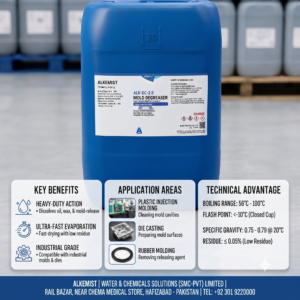
- ALK-DC-2.0 Mold Degreaser: Clear, colorless liquid with a density of 0.75–0.79 g/cm³ at 20°C and a boiling range of 56–100°C. Engineered for rapid flash evaporation, minimal residue, and zero water rinse requirements, making it ideal for in-press mold maintenance and rapid cycle turnaround.
- Heavy-Duty Resin Stripper: Clear to light amber mobile liquid with a density of 0.910–0.950 g/cm³ and an extended boiling envelope of 78–170°C. Formulated with ≥ 99.0% active cleaning solvents and oxygenated penetrating agents for dissolving baked polyurethane, epoxy adhesives, and elastomeric binders.
Selection Considerations & Application Protocols
When choosing between fast-evaporating degreasers and deep-penetrating resin strippers, engineering teams should evaluate the following criteria:
- Soil Profile: Light silicone oils, protective rust inhibitors, and standard mold-release agents dissolve completely with fast-evaporating ALK-DC-2.0. Heavily degraded thermal polyolefins, hot-melt glues, and cured casting resins require extended contact time provided by slower-evaporating oxygenated solvent blends.
- Substrate Compatibility: Pure solvent cleaners are non-corrosive to tool steel, P20, H13, zinc, and aluminum tooling alloys. Confirm elastomer seal compatibility (e.g., fluoroelastomer/FKM vs. standard nitrile seals) prior to flood cleaning assembled slide mechanisms.
- Evaporation Rate & Residue Control: Quick-flash degreasers enable immediate resumption of production runs without film transfer to molded components. Wipe dry using lint-free microfiber substrates after full soil dissolution.
- Storage & EHS Protocols: Both products are flammable industrial liquids. Store sealed containers in dedicated flammable liquid storage areas between 5°C and 30°C away from heat, sparks, open flames, and strong oxidizers. Appropriate PPE—including chemical-resistant nitrile gloves and organic vapor respirators—must be worn during manual spray and wipe applications.
Leave a Reply