B2B & B2C Chemical Sourcing & Technical Supply

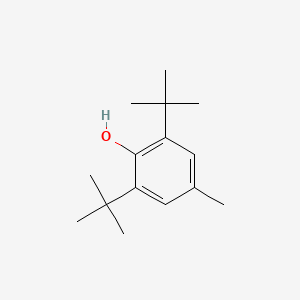
2,6-Di-tert-butyl-4-methylphenol

2,6-Di-tert-butyl-4-methylphenol is butylated hydroxytoluene is a white crystalline solid.. Common uses include plating agent; Heat transferring agent; Antioxidant; Processing aids not otherwise…

CAS No.128-37-0
Product CodePUBCHEM-CID-31404
FormulaC15H24O
Molecular Weight220.35
Gradelaboratory grade
StockOn Request
GHSHazard Pictograms
IrritantIrritantEnvironmentEnvironment

Auto-selected from PubChem where available. Confirm final classification with supplier SDS.

Product Overview

Professional technical and procurement details

Chemical Overview
2,6-Di-tert-butyl-4-methylphenol is butylated hydroxytoluene is a white crystalline solid.. Common uses include plating agent; Heat transferring agent; Antioxidant; Processing aids not otherwise specified; UV stabilizer; Surfactant (surface active agent); Lubricating agent; Polymerization promoter; Dispersing agent; Defoamer; Heat stabilizer; Stabilizing agent; Preservative; Soil amendments (fertilizers); Not Known or Reasonably Ascertainable; Fragrance Heat transferring agent; Antioxidant; Plating agent; UV stabilizer.

Chemical Identity
CAS No.: 128-37-0
Molecular formula: C15H24O
Molecular weight: 220.35
IUPAC name: 2,6-ditert-butyl-4-methylphenol
PubChem CID: 31404

Physical Properties
Appearance / physical description: Butylated hydroxytoluene is a white crystalline solid..
Density: 1.048 at 68 °F (NTP, 1992) – Denser than water; will sink; CID-962.
Melting point: 156 to 160 °F (NTP, 1992).
Boiling point: 509 °F at 760 mmHg (NTP, 1992).

Common Uses
Plating agent; Heat transferring agent; Antioxidant; Processing aids not otherwise specified; UV stabilizer; Surfactant (surface active agent); Lubricating agent; Polymerization promoter; Dispersing agent; Defoamer; Heat stabilizer; Stabilizing agent; Preservative; Soil amendments (fertilizers); Not Known or Reasonably Ascertainable; Fragrance Heat transferring agent; Antioxidant; Plating agent; UV stabilizer.

Safety and Handling
Hazards: Note: This chemical does not meet GHS hazard criteria for 4.6% (306 of 6619) of reports..
Storage: Separated from strong oxidants and strong bases..

Structure References
InChIKey: NLZUEZXRPGMBCV-UHFFFAOYSA-N

Supply Note
Final commercial grade, assay, packing, MOQ, price, stock, country availability and SDS/COA documents are confirmed by ALKEMIST at quotation stage.

Technical Specifications

Identity, properties and equipment data

Identification

CAS Number128-37-0
SKU / Product CodePUBCHEM-CID-31404
Synonyms / Alternative NamesButylhydroxytoluene,
2,6-Di-tert-butyl-p-cresol,
2,6-Di-t-butyl-4-methylphenol,
Ionol,
Stavox,
DBPC,
Impruvol,
Dalpac,
Deenax,
Ionole,
Kerabit,
Topanol
Molecular FormulaC15H24O
Molecular Weight220.35
BrandALKEMIST
Product Gradelaboratory grade

Technical Properties

Purity / AssayAssay / purity to be confirmed from supplier COA.
Physical State / FormButylated hydroxytoluene is a white crystalline solid. (NTP, 1992)
Density1.048 at 68 °F (NTP, 1992) - Denser than water; will sink; CID-962
Melting Point156 to 160 °F (NTP, 1992)
Boiling Point509 °F at 760 mmHg (NTP, 1992)
pH ValueNot available from PubChem; verify from SDS / COA if applicable.
Shelf LifeStable under recommended storage conditions.

Storage & Safety

GHS PictogramsIrritant, Environment
Storage ConditionSeparated from strong oxidants and strong bases. Well closed.
Keep container tightly closed in a dry and well-ventilated place. Storage class (TRGS 510): Non Combustible Solids. General storage may be used. .. A regulated, marked area should be established where this chemical is handled, used, or stored in compliance with OSHA Standard 1910.1045. Store in tightly closed containers in a cool, well-ventilated area away from oxidizing agents (such as peroxides, permanganates, chlorates, perchlorates, and nitrates).
Hazard / Safety InfoNote: This chemical does not meet GHS hazard criteria for 4.6% (306 of 6619) of reports. Pictogram(s): Environmental Hazard Signal: Warning; GHSWarning GHS Hazard Statements: H400 (42.6%): Very toxic to aquatic life [Warning Hazardous to the aquatic environment, acute hazard]; GHSWarning; H410 (84.3%): Very toxic to aquatic life with long lasting effects [Warning Hazardous to the aquatic environment, long-term hazard] Precautionary Statement Codes: P273, P391, and P501 (click each P-code to see the statement) ECHA C&L Notifications Summary: Aggregated GHS information provided per 6619 reports by companies from 92 notifications to the ECHA C&L Inventory. Each notification may be associated with multiple companies.; Reported as not meeting GHS hazard criteria per 306 of 6619 reports by companies.; There are 91 notifications provided by 6313 of 6619 reports by companies with hazard statement code(s).; Information may vary be... Pictogram(s): Health Hazard; Environmental Hazard Signal: Danger; GHSDanger
Permitted in food at levels up to 200 ppm; Despite its widespread use, BHT is a rare skin sensitizer; Percent positive patch test responses were 0.1% in a US series in 1992-4; Contact urticaria has been reported; [Marks, p. 138-9] May have effects on the liver; [ICSC]
Excerpt from NIOSH Pocket Guide for 2,6-Di-tert-butyl-p-cresol:; CID-31404; Exposure Routes: Inhalation, ingestion, skin and/or eye contact; Symptoms: Irritation eyes, skin; In Animals: decreased growth rate, increased liver weight; Target Organs: Eyes, skin (NIOSH, 2024)
This chemical is combustible. (NTP, 1992)
Supply & Availability

Packing, MOQ, location and supplier information

Packing SizeOn request
MOQOn request
PriceRequest Quote
Stock StatusOn Request
Available CountryPakistan
Available LocationPakistan
Dealer / SupplierALKEMIST - chemical seller in Pakistan
Documentation

SDS, TDS, COA and supporting files

SDS / TDS / COA documents can be uploaded from the product editor.

⚗️Glassware
Library
🧪Laboratory
Chemicals
🌸Perfume OilsExplore